
Authentic Jade Roller: How to Spot the Real Thing (And Why It Matters)
You've probably noticed jade rollers everywhere, from beauty aisles to influencer shelfies to gift shops at the airport. They're inexpensive, they look pretty, and they promise all sorts of skin benefits. But here's something most people never think to ask: is the roller you're using actually made of jade, or is it a convincing imitation?
This isn't just a technicality for gemstone enthusiasts. The material your roller is actually made from affects everything from how it feels on your skin to how long it lasts to whether you're genuinely getting the benefits you paid for.
Here's how to tell the difference, and why it's worth knowing.
Why Fake Jade Rollers Are So Common
Real jade is a relatively rare and valuable material, and manufacturing genuine jade rollers at scale is expensive. As jade rollers exploded in popularity, plenty of manufacturers found ways to meet demand without using authentic jade at all.
Many budget rollers are made from dyed glass, plastic, or stones like serpentine (sometimes called "Xiuyan jade" or "new jade") that are chemically treated or dyed to resemble the real thing. These materials can look convincingly similar to jade in photos and even in person, especially to anyone who hasn't handled genuine jade before.
This matters because true jade has specific properties, cooling ability, density, durability, that these substitutes simply don't replicate. If you're buying a jade roller expecting those benefits, an imitation stone won't deliver the same experience.

How to Tell If Your Jade Roller Is Real
Check the Color and Pattern
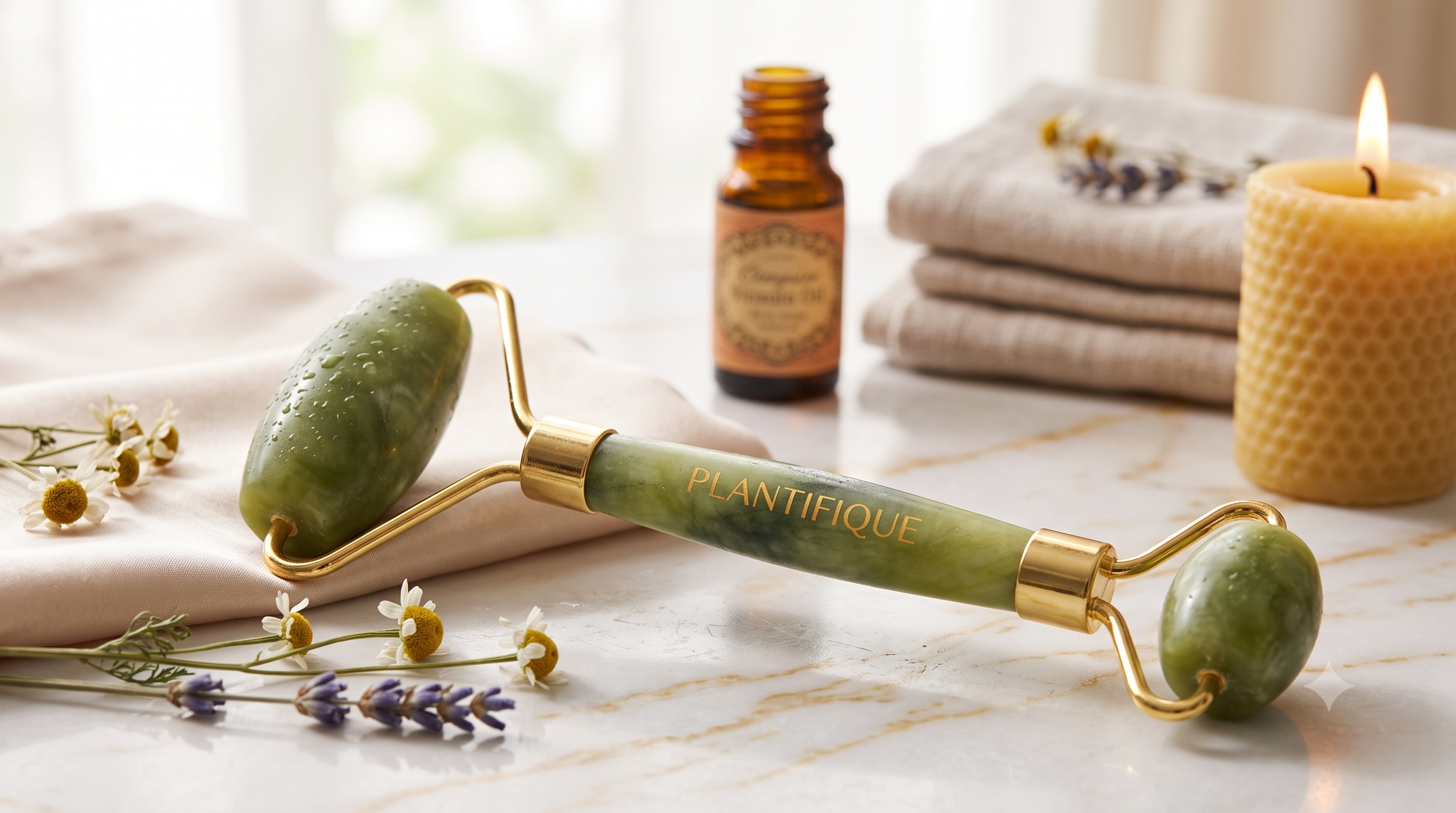
Genuine jade has natural color variation. Real stones range from deep forest green to a lighter, almost milky green, often with white swirls, small inclusions, or subtle irregularities running through the stone. No two pieces of authentic jade look exactly alike.
Fake jade, by contrast, often has a suspiciously uniform, consistent color throughout. If your roller is a single flat shade of green with no variation, texture, or natural imperfection, that's a signal it may be dyed glass or treated stone rather than genuine jade.
Test the Temperature
Authentic jade has a naturally cool feel and is slow to warm up, even when held in your hand. If you hold a real jade roller in your closed fist for about 30 seconds and it still feels cool rather than quickly matching your body temperature, that's consistent with genuine jade.
Keep in mind this test isn't perfectly reliable on its own, since some substitute materials like marble can also feel cool to the touch. It's a helpful clue, but not definitive proof on its own.
Feel the Weight
Real jade is dense and noticeably heavier than its size would suggest. If you pick up your roller and it feels surprisingly light, almost like plastic, that's a red flag. Genuine jade has a substantial, weighty feel in your hand that's hard to replicate with cheaper materials.
Check for Air Bubbles
Hold your roller up to good light and inspect the stone closely. If you can see tiny air bubbles trapped inside, this is one of the clearest signs you're holding treated glass rather than natural stone. Authentic jade, being a naturally formed mineral, will not have visible air bubbles.
Consider the Price
This is one of the most practical indicators. Authentic jade rollers require actual jade material, which costs significantly more to source and manufacture than glass or plastic substitutes. If a jade roller is priced remarkably low, it's worth being skeptical about what material is actually being used.
This doesn't mean expensive automatically means authentic, but a genuinely low price point is a reasonable signal that the stone likely isn't real jade.
Look for the Type of Jade Specified
There are only two true forms of jade: nephrite and jadeite. If a product description mentions unfamiliar terms like "Xiuyan jade," "new jade," "Australian jade," "Malaysian jade," or "mountain jade," these are not authentic jade varieties. They're marketing terms for substitute stones designed to sound legitimate.
A brand that's transparent about using real nephrite or jadeite jade will typically say so directly rather than using vague or unusual terminology.
Does It Actually Matter If It's Real?
Here's an honest answer: it depends on what you're looking for.
If your primary goal is the cooling, de-puffing sensation and a pleasant self-care ritual, even a well-made imitation stone can provide a similar physical experience, especially if you keep it in the fridge before use. The actual skin benefits of facial rolling (improved circulation, lymphatic drainage support, better product absorption) come largely from the massage technique and the tool's smooth glide, not exclusively from the jade itself.
However, if you're specifically drawn to genuine jade for its natural cooling properties, its durability over years of use, or simply because you want an authentic product that matches what you paid for, then buying a verified real jade roller matters quite a bit.
There's also a quality and longevity factor. Authentic jade, being naturally dense and scratch-resistant, tends to hold up better over years of regular use than cheaper glass or plastic alternatives, which can crack, scratch, or lose their finish more easily over time.
What to Look for When Buying
Buy from brands that specify the jade type. Look for explicit mentions of nephrite or jadeite jade rather than vague terms like "natural stone" or unfamiliar jade variants.
Be wary of prices that seem too good to be true. A genuinely low price on a supposedly authentic jade roller is worth questioning.
Look for natural variation in the product photos. If every roller from a brand looks identical in color and pattern with zero natural variation, that's often a sign of dyed glass or treated stone rather than genuine jade.
Check for reviews mentioning the stone's weight and feel. Real customers often comment on how substantial and cool a genuine jade roller feels, which can help confirm authenticity before you buy.
Caring for a Genuine Jade Roller
If you do have an authentic jade roller, a few care habits help it last.
Clean it gently after each use. A soft, slightly damp cloth is enough to remove oil and product residue without damaging the stone's surface.
Avoid extreme temperature changes. While jade handles cold well (like being placed in the fridge), avoid drastic temperature shifts like moving it from a hot car directly into ice water, which can stress the stone over time.
Store it safely. Even though jade is scratch-resistant, it can still chip or crack if dropped on a hard surface. Keep it somewhere secure between uses.
The Bottom Line
Not every jade roller on the market is actually made of jade, and understanding how to spot the difference helps you make an informed choice about what you're buying and why. Whether authenticity matters most to you for the genuine cooling properties, the durability, or simply wanting what you paid for, a few simple checks (color variation, weight, temperature, and price) can help you tell real jade from a convincing substitute.
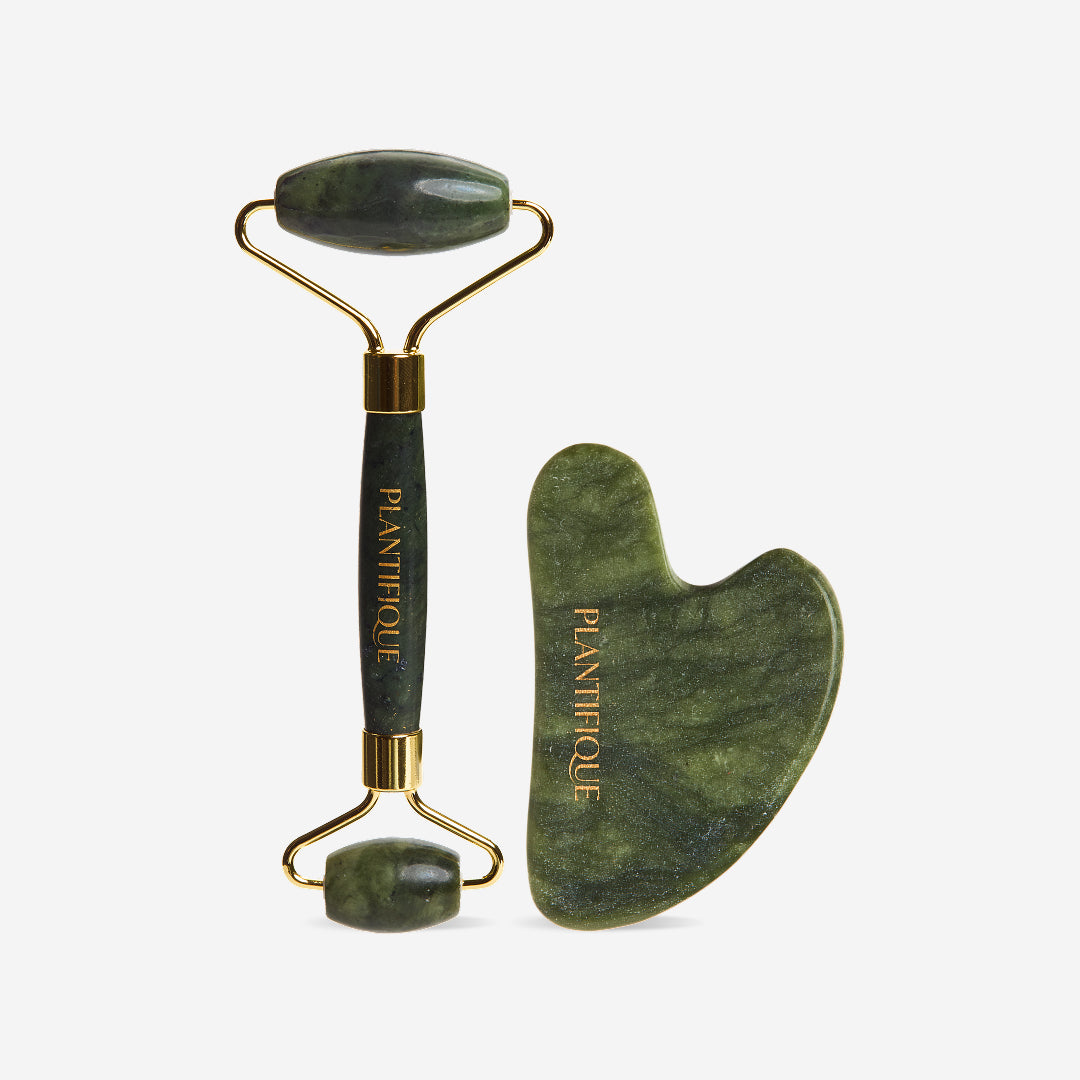
Looking for the real thing? The Jade Roller Set is crafted with genuine jade, giving you the authentic cooling sensation and durability that comes from natural stone, paired with a matching gua sha tool for a complete facial massage routine.
Read more
Scroll through TikTok for more than five minutes and you'll see it: someone gliding a smooth stone tool along their jawline, and somehow their face looks sharper, more defined, more sculpted by the...
If you've only ever used gua sha on your face, you're missing out on half of what this ancient tool was actually designed for. Long before it became a jawline-sculpting trend on social media, gua s...