
Jade Body Gua Sha: Why This Ancient Tool Isn't Just for Your Face
If you've only ever used gua sha on your face, you're missing out on half of what this ancient tool was actually designed for. Long before it became a jawline-sculpting trend on social media, gua sha was practiced on the back, arms, legs, and shoulders as a way to release tension, boost circulation, and support the body's natural detoxification process.
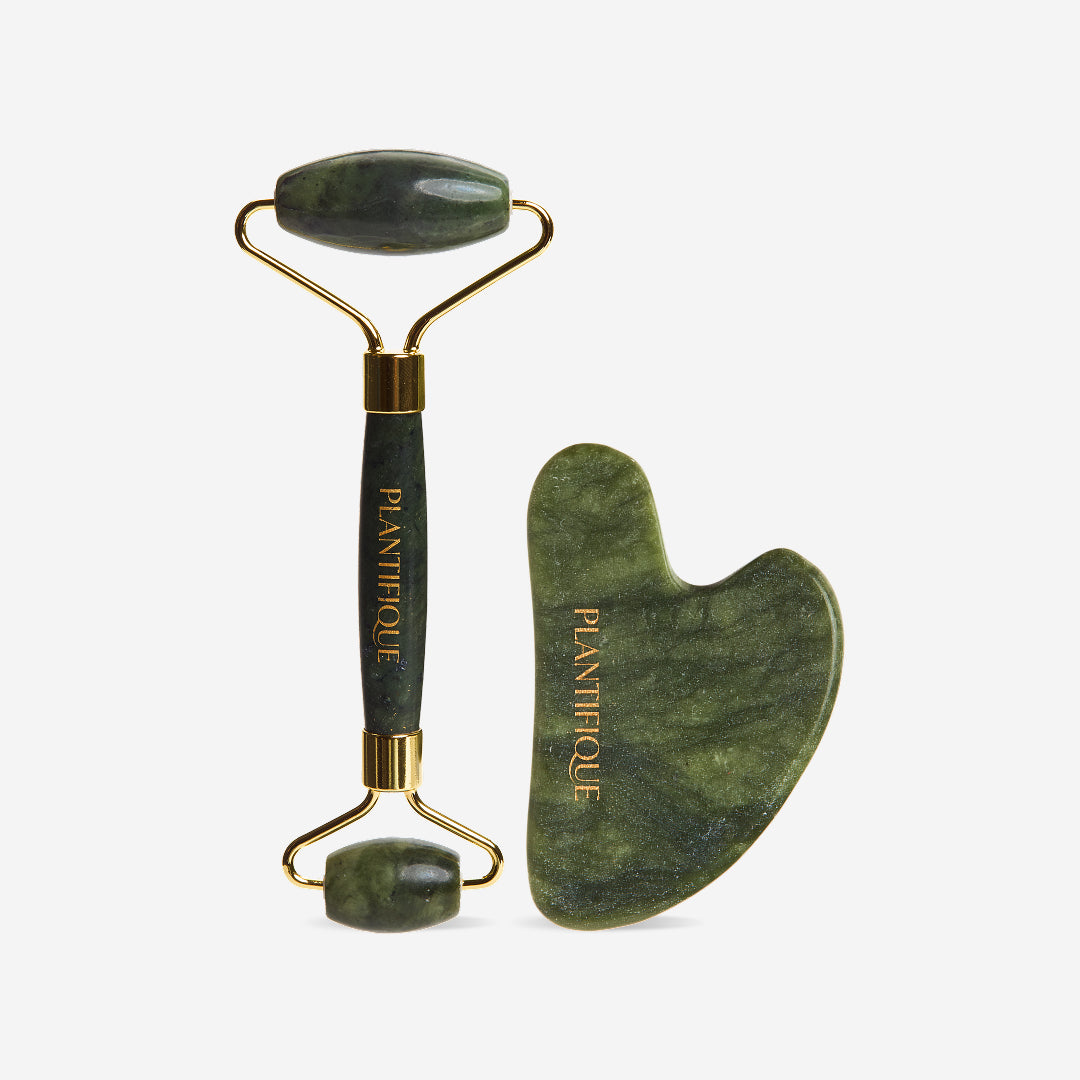
Your jade gua sha tool isn't limited to your cheekbones and jawline. Used correctly on your body, it becomes a genuinely effective self-massage tool for tired muscles, tension knots, and that heavy, sluggish feeling you get after a long day on your feet or hunched over a desk.
Here's everything you need to know about bringing gua sha into your body care routine.
What Body Gua Sha Actually Does
Body gua sha works on the same core principles as facial gua sha, just applied to larger muscle groups and thicker skin. The technique involves gliding the smooth edge of your tool across the skin in firm, deliberate strokes, which supports two key things: circulation and lymphatic drainage.
As you sweep the tool across your skin, you're encouraging blood flow to the surface and helping move built-up fluid through your lymphatic system. This is the same fluid-draining principle behind facial gua sha and puffiness reduction, just working on a larger scale across your shoulders, back, arms, and legs.
Beyond the physical mechanics, many people also use body gua sha as a genuine tension-release ritual. If you carry stress in your shoulders, spend all day at a desk, or deal with tight, heavy-feeling legs after standing for hours, a few minutes of gua sha can offer real, tangible relief.
The Key Benefits
Releases muscle tension. Tight shoulders, a stiff neck, or knots in your upper back respond well to the firm, sweeping pressure of a gua sha tool. It's a simple way to self-massage areas that are hard to reach or that you'd normally need someone else to work on.
Supports circulation. The gliding motion stimulates blood flow to the surface of your skin, which can help areas that feel sluggish or cold, particularly in your legs and feet after a long day.
Boosts lymphatic drainage. Sweeping strokes, especially when moving toward your heart, support your body's natural process of clearing excess fluid and cellular waste. This is particularly popular for legs that feel heavy or swollen after standing or sitting for extended periods.
Smooths and firms the appearance of skin. With consistent use, many people notice their skin looks smoother and slightly more toned in the areas they regularly treat.
Creates a genuine self-care ritual. Beyond the physical benefits, taking a few minutes to work through your body with a gua sha tool is a form of mindful, intentional self-care that many people find genuinely calming.

How to Use Jade Gua Sha on Your Body
Step 1: Always Start With Oil or Lotion
This step is essential everywhere on your body, just as it is on your face. Apply a body oil, lotion, or serum to the area you're about to work on. This allows the tool to glide smoothly without dragging or pulling at your skin.
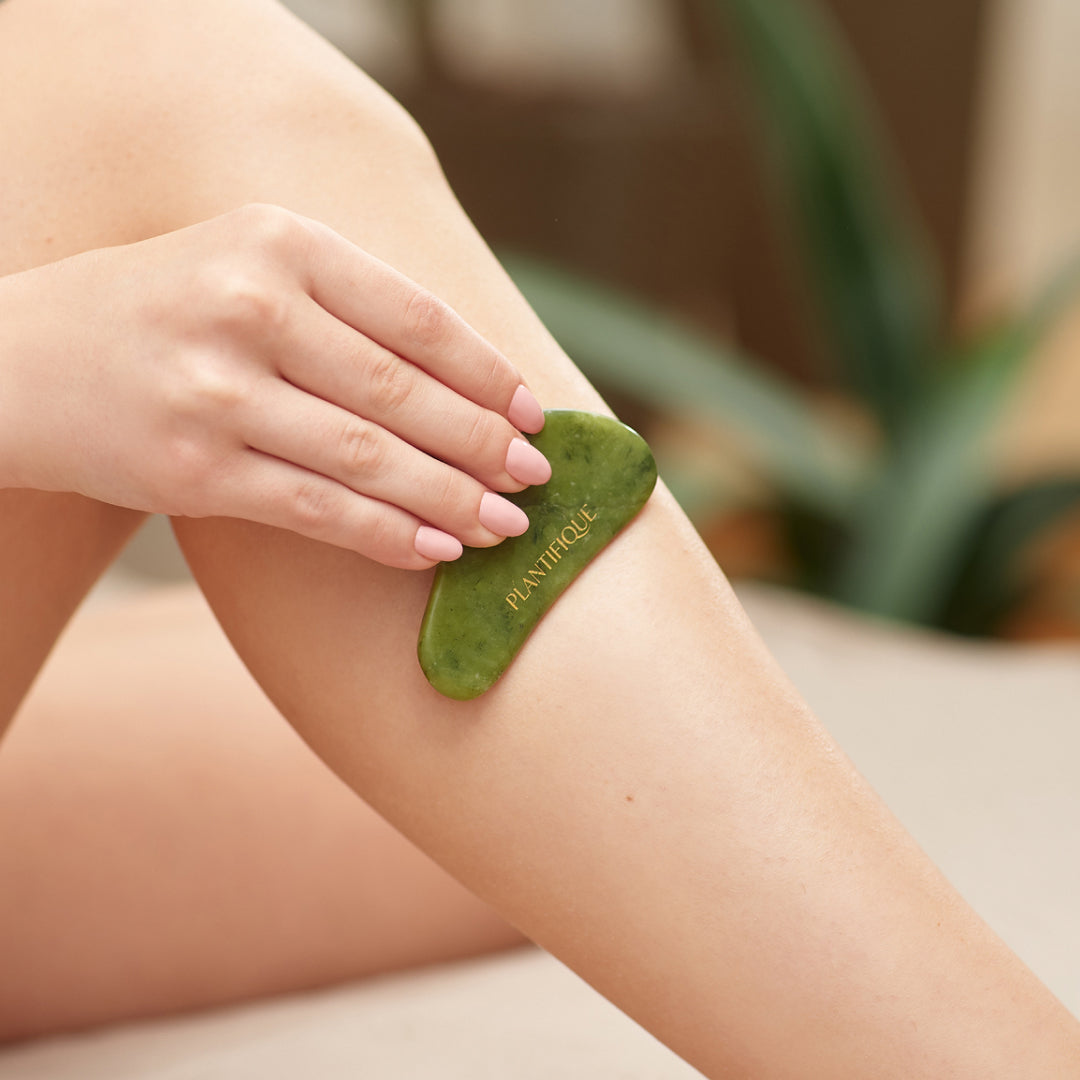
Step 2: Legs (Ankles to Thighs)
Your legs, especially if they feel heavy or tired, respond well to gua sha. Start at your ankles and sweep the tool upward toward your knees, then continue from your knees up toward your thighs. Always work in an upward direction, toward your heart, to support proper lymphatic flow.
Repeat each section several times with firm, consistent pressure. This is especially soothing after a long day of standing or after a workout.
Step 3: Arms
Starting at your wrist, sweep upward along your forearm toward your elbow, then continue from your elbow up toward your shoulder. Work each arm separately, moving in the same upward direction throughout.
Step 4: Shoulders and Neck
This is often where people hold the most tension, especially if you spend hours at a desk or looking down at your phone. Starting at the base of your neck, sweep outward across your shoulder toward the tip of your shoulder. Repeat this motion several times on each side until you feel some release in tight areas.
Step 5: Back (With Assistance if Possible)
Your back is harder to reach effectively on your own, so this step works best with a partner or by using a longer-handled tool designed for self-application. If working alone, focus on the areas you can comfortably reach, using downward strokes along the muscles near your spine, avoiding direct pressure on the spine itself.
Step 6: Finish With Longer, Calming Strokes
After you've worked through the areas of tension, finish with a few long, gentle strokes over the areas you've treated. This helps signal that the massage is complete and encourages your body to relax into the results.
A Few Important Technique Notes
Direction matters. For your limbs, always work upward toward your heart. This supports the natural direction of lymphatic flow rather than working against it.
Pressure should be firm but never painful. You want to feel a genuine massage, similar to a deep tissue treatment, but it should never hurt. If something feels sharp or uncomfortable, ease up on the pressure.
Some redness is normal. Unlike the face, where gua sha shouldn't leave visible marks, body gua sha can occasionally cause temporary redness or small marks called petechiae, especially with firmer pressure. This is generally considered a normal response and typically fades within a few days. If you experience unusual bruising or discomfort, ease off pressure or take a break from that area until any marks fully clear.
Consistency beats intensity. A few minutes of gua sha two to three times a week tends to deliver better ongoing results than one intense session followed by weeks of nothing.
When to Do Your Body Gua Sha Routine
Many people find it most effective right after a shower, when your skin is warm and your muscles are slightly more relaxed. Apply your body oil or lotion while your skin is still slightly damp, then move into your gua sha routine.
It's also a wonderful evening ritual, especially for legs that feel tired and heavy after a long day, or for shoulders that have been carrying tension since your morning commute.
Who Should Be Cautious
Body gua sha is generally safe for most people, but a few situations call for extra caution or avoiding it altogether:
- Avoid gua sha directly over areas with active skin conditions, open wounds, or recent cosmetic procedures
- If you're pregnant, check with your healthcare provider before starting a gua sha routine, particularly on the lower back or abdomen
- Avoid firm pressure directly on the spine or bony areas
- If you have a bleeding disorder or are on blood thinners, consult a doctor first, since gua sha can occasionally cause minor bruising
If you're ever uncertain, starting with lighter pressure and gradually increasing as your body responds is always the safer approach.
The Bottom Line
Your jade gua sha tool has a lot more to offer than facial contouring. Used on your body, it becomes a genuinely useful tool for releasing tension, supporting circulation, and giving tired legs, shoulders, and arms some real relief. It's simple, it takes just a few minutes, and unlike a lot of self-care trends, the benefits (better circulation, released tension, a calmer nervous system) are things you can actually feel immediately.
Next time you reach for your gua sha tool, don't stop at your jawline. Your shoulders and legs are waiting for the same care.
Ready to expand your routine? The Jade Gua Sha works beautifully for both facial contouring and body massage, giving you one versatile tool for tension relief from your face all the way down to your legs.
Read more
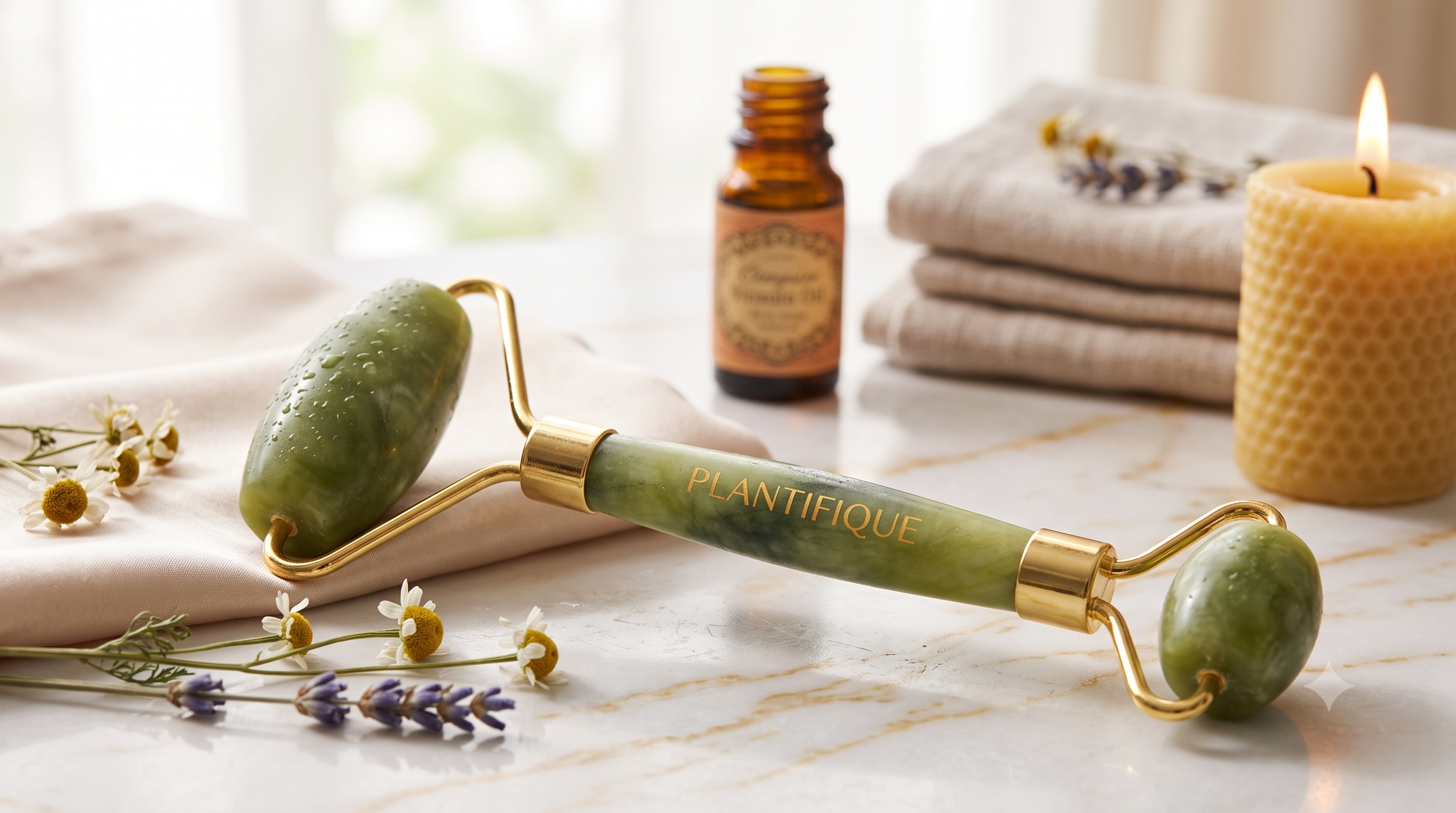
You've probably noticed jade rollers everywhere, from beauty aisles to influencer shelfies to gift shops at the airport. They're inexpensive, they look pretty, and they promise all sorts of skin be...
You've probably seen it on labels lately. PDRN. It sounds technical, maybe even a little intimidating, and if you've looked into it further, you may have come across its more startling nickname: sa...