
Why Regular Cleansing Pads Aren't Enough: What Makes Turmeric Different
You bought cleansing pads. You've been using them for a few weeks. Your face is clean. You're not complaining. But you're also not... amazed.
Your skin is clean. It's fine. But it's not glowing. It's not noticeably clearer. It's not brighter or more even-toned. It's just... clean.
Here's the problem: regular cleansing pads are doing exactly one job: cleansing. They're removing dirt, oil, and makeup. That's functional. But it's not optimal.
Compare that to turmeric cleansing pads, which do something completely different. They're not just cleansing. They're treating your skin while they cleanse. Every single swipe is doing multiple things at once.
Let's talk about what makes regular pads fall short, and why turmeric changes the equation.
What Regular Cleansing Pads Actually Do
A regular cleansing pad is basically a textured pad soaked in a cleansing solution. That solution contains surfactants (cleansing agents) and maybe some soothing ingredients like aloe. That's it.
The pad itself provides gentle physical exfoliation through its texture. The solution removes dirt and oil. You swipe it across your face. Your face is clean. Job done.
And yes, clean skin is important. You don't want dirt and oil sitting on your face. But cleansing is just the foundation. It's not enough by itself to create genuinely healthy, glowing skin.
Here's what regular pads are NOT doing:
They're not treating anything. They're removing debris, but they're not addressing skin concerns. No brightening. No anti-inflammatory action. No antioxidant protection.
They're not addressing root causes. Dark spots, dullness, uneven tone, inflammation – these aren't caused by dirt. They're caused by deeper skin issues. A regular pad that just removes dirt isn't going to fix these.
They're not optimizing skin health. They're getting the job done, but they're not making your skin better. They're just preventing it from getting worse.
They're not supporting long-term skin improvement. You use a regular pad, your face is clean, and that's the extent of the benefit. You're not seeing cumulative improvements week over week.
This is why people use regular pads for a month and then... nothing really changes. They're clean, sure, but they're not transformed.
What Turmeric Pads Do Differently
Turmeric cleansing pads aren't just cleansing. They're treatment delivered in a cleansing format.
The difference starts with the ingredients. Turmeric (curcumin) isn't just a cleansing agent. It's:
Anti-inflammatory. Curcumin reduces inflammation at a cellular level. So while you're cleansing, you're also calming any irritation or inflammation in your skin.
Antioxidant. It neutralizes free radicals, which means you're protecting your skin from future damage while you cleanse.
Antimicrobial. It fights bacteria, which is especially helpful if you have acne or are prone to breakouts.
Brightening. Turmeric supports a brighter, more even complexion. So over time, you're not just cleansing – you're gradually brightening your skin.
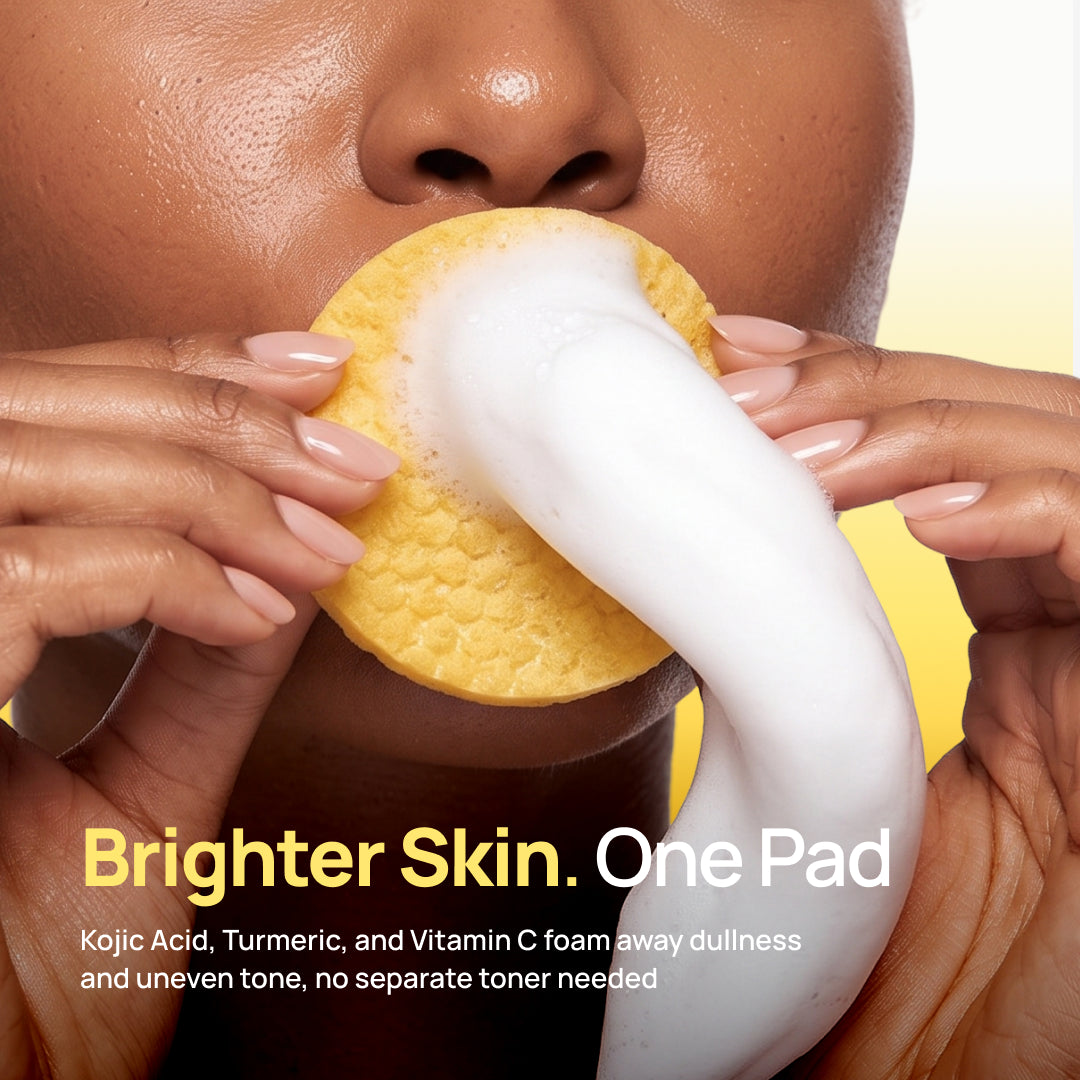
Turmeric pads also typically include other actives (like kojic acid, vitamin C, or other brightening ingredients) that work synergistically to address multiple skin concerns.
So the pad you're using twice a day isn't just removing dirt. It's:
- Cleansing
- Gently exfoliating
- Reducing inflammation
- Protecting against oxidative damage
- Brightening
- Supporting clearer, calmer skin
That's a completely different value proposition than a regular pad.
The Cumulative Effect: Why Time Matters
Here's where the real difference shows up: over time.
With regular pads, you see no improvement beyond cleanliness. You use them for a week, a month, three months – your skin looks the same, just clean.
With turmeric pads, you see progressive improvement. Week 1, your skin feels cleaner and maybe slightly smoother from the gentle exfoliation. Week 3, you notice your skin tone is more even and your inflammation is down. Week 6, your skin is noticeably brighter and clearer. Week 12, your skin has genuinely transformed.
This happens because turmeric pads aren't just maintaining your skin. They're actively improving it. Every single use is delivering ingredients that support skin health and address concerns.
Over 12 weeks of consistent use, that adds up to visible, significant changes. Regular pads won't give you that. They'll keep you clean. Turmeric pads will transform your skin.
The Ingredient Depth: Quality Matters
Here's another difference: what's actually in the pad.
A regular cleansing pad might have water, a surfactant, and maybe glycerin or aloe. That's a pretty basic formula. It cleanses, but it doesn't do much else.
Turmeric cleansing pads have:
- Turmeric extract (anti-inflammatory, antioxidant, antimicrobial)
- Often kojic acid (brightening, addresses dark spots)
- Often vitamin C (antioxidant, brightening, supports collagen)
- Hyaluronic acid (hydration)
- Various plant extracts and natural ingredients
You're not just cleansing with these pads. You're delivering a full treatment system. The ingredient list is actually long and purposeful.
This is why paying for a quality turmeric pad is worth it. You're not just paying for the pad. You're paying for the active ingredients and the formulation research that went into making something that actually works.

The Results: What You'll Actually See
With regular pads: your skin is clean. That's the only measurable outcome.
With turmeric pads:
- Clearer, calmer skin (especially if you deal with acne or inflammation)
- Brighter, more even complexion
- Smoother texture
- Reduced irritation and sensitivity
- Improved skin tone
- Visible improvement in dark spots or discoloration over time
- Overall healthier-looking skin
These aren't subtle differences. People notice. After a month of turmeric pads, your friends might ask what you changed. They can see it.
With regular pads? People don't notice anything because nothing is changing beyond surface cleanliness.
The Cost-Benefit Analysis
You might be thinking: "But turmeric pads cost more than regular pads."
True. But here's the math:
A regular pad is cheaper upfront, but you're buying a product that just cleanses. You're not seeing results beyond that.
A turmeric pad costs more, but you're buying a product that cleanses, exfoliates, treats inflammation, brightens, and protects your skin. You're seeing cumulative results week over week. Over 12 weeks, you have genuinely transformed skin.
From a cost-per-benefit perspective, turmeric pads are actually the better investment. You're getting more value because you're getting more results.
Plus, when your skin is actually improving, you're less likely to buy other products chasing results. A bottle of expensive brightening serum? You might skip it if your turmeric pads are already delivering brightness. A targeted treatment for inflammation? You might not need it if your turmeric pads are already handling that.
In the long run, investing in effective turmeric pads saves you money because you're not chasing results with multiple products.
Why Settle for "Clean" When You Can Have "Better"?
The core difference comes down to this: regular pads get your skin clean. Turmeric pads get your skin clean and improve it.
Clean is functional. Better is transformational.
If you're already committing to a cleansing routine (and you should be – cleansing is non-negotiable), why not commit to something that actually improves your skin while you're at it?
The effort is the same. You're swiping a pad across your face either way. The only difference is what you're swiping.
With regular pads, you get clean skin. With turmeric pads, you get clean skin that's also getting brighter, calmer, healthier, and more even-toned.
That's not a small difference. That's the difference between maintenance and transformation.
Read more
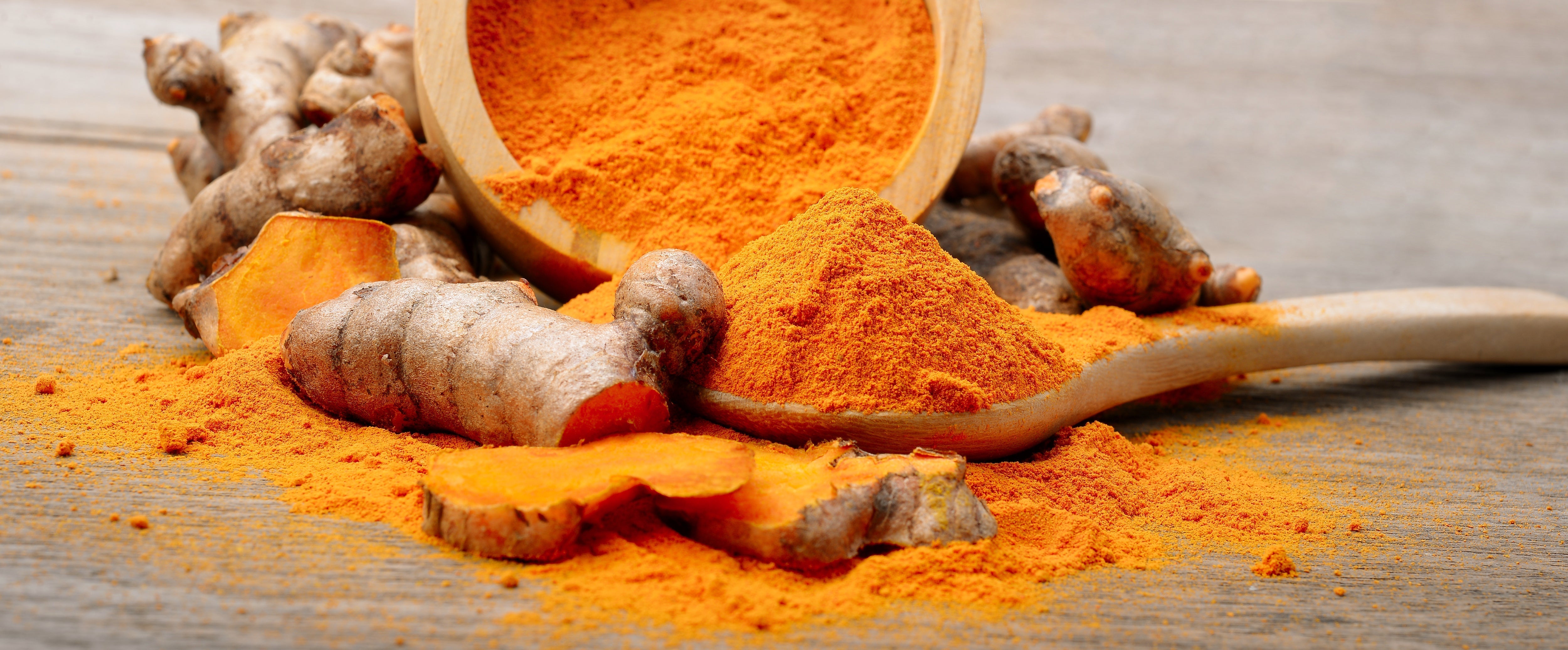
Walk into any skincare store right now. Look at the ingredient lists. Turmeric is everywhere. It's in soaps. It's in serums. It's in masks and toners and oils. Five years ago, turmeric was basicall...
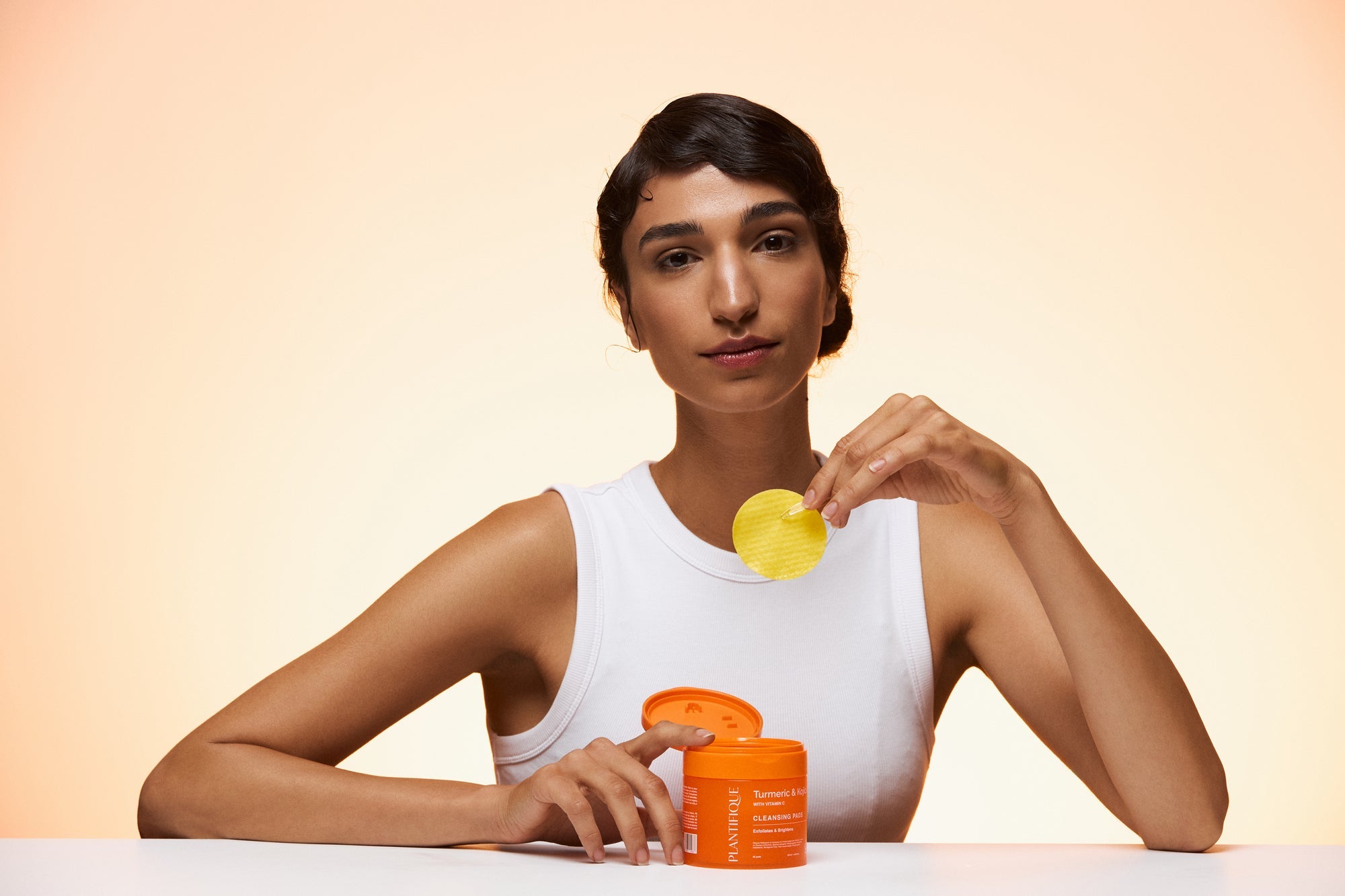
You're standing in the skincare aisle (or scrolling online) and you see turmeric cleansing pads. You've heard about them. Everyone's talking about them. But you're not sure if they're actually wort...