
How Do Foot Peeling Masks Work (And Why You're Probably Not Using One Yet)
You know that moment when you realize your feet look like they've been through a desert drought? The cracked heels, the calluses that have developed their own calluses, the general vibe of "I haven't seen soft skin down there in years." Yeah. That moment.
The irony is that you're probably spending good money on face masks, serums, and all manner of skincare for the part of your body that literally sits in a chair most of the day. But your feet? Your feet that walk you through life, that carry you through airports and bad relationships and grocery store runs? They're getting the short end of the stick. Usually the very dried-out, cracked-up short end.
Here's the thing: foot peeling masks exist to fix exactly this problem. And they actually work. But most people have no idea how they work, so they either skip them entirely or use them wrong and wonder why their feet aren't suddenly baby-soft.
Let's change that.
The Foot Problem No One Talks About
Before we get into the magic, let's acknowledge the elephant in the room: your feet are overworked and underappreciated.
Your feet have a rough life (pun intended). They're:
- Trapped in shoes that don't breathe
- Exposed to friction and pressure all day
- Dealing with sweat and moisture that gets trapped instead of evaporating
- Being ignored while you pamper literally every other part of your body
Over time, this creates a build-up of dead skin. The outer layer of your skin is supposed to naturally shed, but when there's that much dead skin hanging around, it doesn't happen on its own. Instead, it just keeps building up, getting thicker, getting harder, until your heels feel like they could sand furniture.
That's where foot peeling masks come in.
What Actually Happens When You Use a Foot Peeling Mask
Here's the thing about foot masks that surprises most people: they're not some high-tech invention. They're actually pretty simple. You're just applying a liquid filled with exfoliating ingredients to your feet and letting chemistry do the heavy lifting.
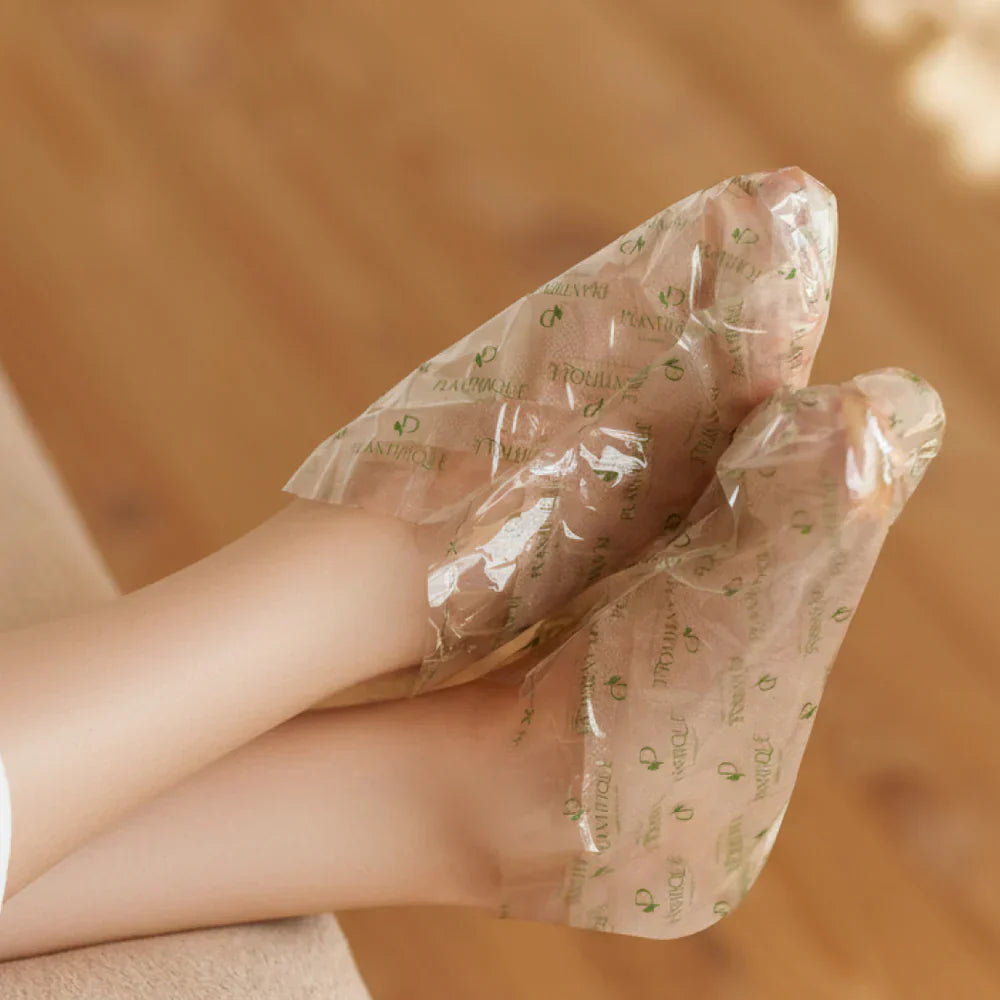
When you put on those booties (and yes, you'll look ridiculous, but your future soft feet will thank you), you're creating a controlled environment where the active ingredients can work on your skin undisturbed. The booties keep the liquid in contact with your feet, prevent evaporation, and give those ingredients time to do their job.
That job? Breaking down the bonds between dead skin cells.
Think of your outer skin layer like a brick wall. Each dead skin cell is a brick, and the stuff holding them together is the mortar. Foot peeling masks contain alpha-hydroxy acids (AHAs) and other natural acids that work like a solvent on that mortar. They weaken the bonds between the dead cells so they can separate naturally.
But here's where it gets interesting: it doesn't happen immediately. You apply the mask, soak for 60-90 minutes, rinse it off, and then... nothing. Your feet look normal. You might even think it didn't work.
Then, 3-5 days later, you get in the shower and suddenly your feet start peeling.
The Timeline: What You'll Actually See
This is where a lot of people get confused or freaked out. So let's walk through exactly what happens, day by day.
Day 0 (Application Day)
You soak your feet in warm water, dry them thoroughly, slip into the booties, and relax for about 90 minutes. Your feet feel the same as always when you rinse off. A little soft maybe. Anticlimactic? Yes. Normal? Also yes.
Days 1-2
Nothing visible happens. Your feet might feel slightly softer or smoother in some spots, but there's no peeling yet. This is where impatient people start doubting whether the product works. It does. Have faith.
Days 4-5
This is when the magic starts. You'll notice your skin starting to feel papery or flaky, usually around the edges first (toes, outer edge of foot). You might see little bits coming off, or just feel the texture change. If you look closely, you can see the outline of where the old skin is separating from the new skin underneath.
Days 5-7
This is peak peeling season. Larger sections of skin start coming off, sometimes in whole sheets. It looks kind of gross. It feels amazing. You might find yourself weirdly fascinated, taking photos to send to friends (they won't understand why you're excited about foot skin, but that's okay). The temptation to pull the skin off is strong. Don't do it. Let it peel naturally.
Days 7-10 (sometimes longer)
The peeling continues, getting lighter as you get down to all the fresh skin. By the end of this phase, your feet are smooth, soft, and genuinely unrecognizable compared to where you started.
After Day 14
You have the soft feet of your dreams. At least for a few months.
The Science (Made Actually Simple)
Okay, so here's why this works, explained in a way that won't put you to sleep.
Your skin is constantly renewing itself. Every 28 days or so, the cells in the outer layer of your skin (the epidermis) are supposed to naturally shed and be replaced by the fresher cells underneath. This is normal and healthy.
But on your feet, this process gets backed up. Dead cells pile up because there's so much friction and so little moisture that they don't shed the way they should. It's like a traffic jam of dead skin.
Foot peeling masks contain alpha-hydroxy acids (AHAs), which are naturally derived from fruits like apples, grapes, and citrus. These acids have a pH that's acidic enough to break down the protein bonds holding those dead skin cells together. When you apply the mask, the acids seep into your skin and start dissolving those bonds.
Once the bonds are weakened, your body's natural healing response kicks in. Your skin recognizes that the dead cells have been loosened, and it starts shedding them. This is why the peeling doesn't happen immediately. Your body still needs a few days to recognize the change and initiate the shedding process.
The best foot masks also include hydrating and soothing ingredients (like aloe vera or plant oils) so your skin doesn't get irritated during this process. It's exfoliation, but gentle exfoliation.
Why People Think Foot Peeling Masks Are Scary (They're Not)
A lot of people are hesitant about foot masks because the peeling looks intense. It is visually intense. But here's what's actually happening: you're just removing dead skin that your body was trying to get rid of anyway.
The peeling isn't painful. It might feel a little tight or uncomfortable if you have very sensitive skin, but it shouldn't hurt. If it does, you might have a sensitivity to one of the ingredients, and you should patch-test before your next application.
The peeling doesn't damage your skin. You're not stripping away live skin or burning anything. You're removing dead layers that are already disconnected from the living tissue underneath. Once they're gone, you're left with healthy, hydrated skin.
The process is totally normal. This is just your body doing what it's designed to do, just with a little chemical help to get past the traffic jam.
The Secret to Actually Good Results
Most people who say foot masks "didn't work" made one of these mistakes:
1. They didn't follow the instructions. The soak time matters. The warm water soak after application matters. If you skip steps, you get weaker results.
2. They pulled the skin off. This is tempting. Don't. If you force the peeling before the skin is ready to shed, you can end up with irritated patches and uneven results. Let your body do this naturally.
3. They didn't moisturize after. Once the peeling is done, your feet need hydration. Use a good foot cream or lotion to lock in moisture. This makes your feet feel even softer and helps prevent immediate dryness.
4. They stopped at one application. One foot mask will give you soft feet for a while. But if you want to keep them soft, you'll need to do this occasionally (most people do it once every 2-3 months). Think of it like a reset button for your feet.
Why Plantifique's Foot Masks Are Different
Not all foot peeling masks are created equal. Some use harsh chemicals and cheap ingredients. Others use natural acids but skip the hydrating components, leaving your feet feeling paper-dry after they peel.
Plantifique's foot masks use naturally derived AHAs from fruit extracts combined with hydrating ingredients like aloe vera. So you get the effective exfoliation without the harshness. The masks also come in multiple formulations (Peach, Strawberry, Vitamins, Lavender) so you can pick the ingredients that appeal to you, which honestly makes the whole experience feel less clinical and more like self-care.
And they actually work. 2000+ reviews with an average of 4.9 stars isn't a coincidence.

The Bottom Line
Foot peeling masks work because they use gentle acids to break down the bonds holding dead skin cells together, allowing your body to naturally shed years of build-up and reveal the soft, healthy skin underneath. It's not magic. It's just chemistry and a little patience.
The process takes about 7-10 days from application to fully peeled feet. It looks kind of gross while it's happening. And the results are genuinely worth it.
Your feet deserve the same care you give your face. They work harder and complain less. So treat them to a foot peeling mask, commit to following the instructions, and prepare to fall in love with your feet again.
You've earned soft feet. Go get them.
Read more
The new year is the perfect excuse to refresh your self-care routine. Here are the must-have products and beauty tips to help you look its absolute best this year.
"Superfood" is one of those words that gets thrown around until it loses all meaning. Superfoods for breakfast. Superfoods for energy. Superfoods for longevity. At some point, we all just started e...