
Superfood Clay Mask vs. Sheet Masks: Which One Your Skin Needs
You're standing in front of your skincare shelf staring at two very different masks. One is a creamy pot you apply with your fingers. One is a delicate fabric sheet you just press onto your face. They look nothing alike, they work nothing alike, and they're definitely not interchangeable.
The confusion makes sense. Both call themselves masks. Both promise clearer, healthier-looking skin. Both take about 15 to 20 minutes. But if you use the wrong one for your skin's actual needs, you'll end up disappointed, or worse, with irritated skin.
The real answer isn't which one is better. It's understanding what each one actually does, who it's designed for, and when you should reach for it. Once you know that, building a mask routine that actually works becomes simple.

What Is a Clay Mask (And What Makes Superfood Marine Clay Different)
A clay mask is a paste or cream formula you apply directly to clean skin, let dry, and then rinse off. The core ingredient is mineral clay like bentonite or kaolin, which has been used for centuries to draw impurities, excess oil, and buildup out of the skin.
The magic happens as it dries. As the clay sets on your skin, it pulls toxins, bacteria, and clogged sebum to the surface where they can be rinsed away. It's why clay masks are so effective for acne-prone or congested skin.
Most clay masks, though, have a reputation for being too drying. You rinse them off and your skin feels tight, flaky, or uncomfortable. That's because straight clay strips moisture as part of the process.
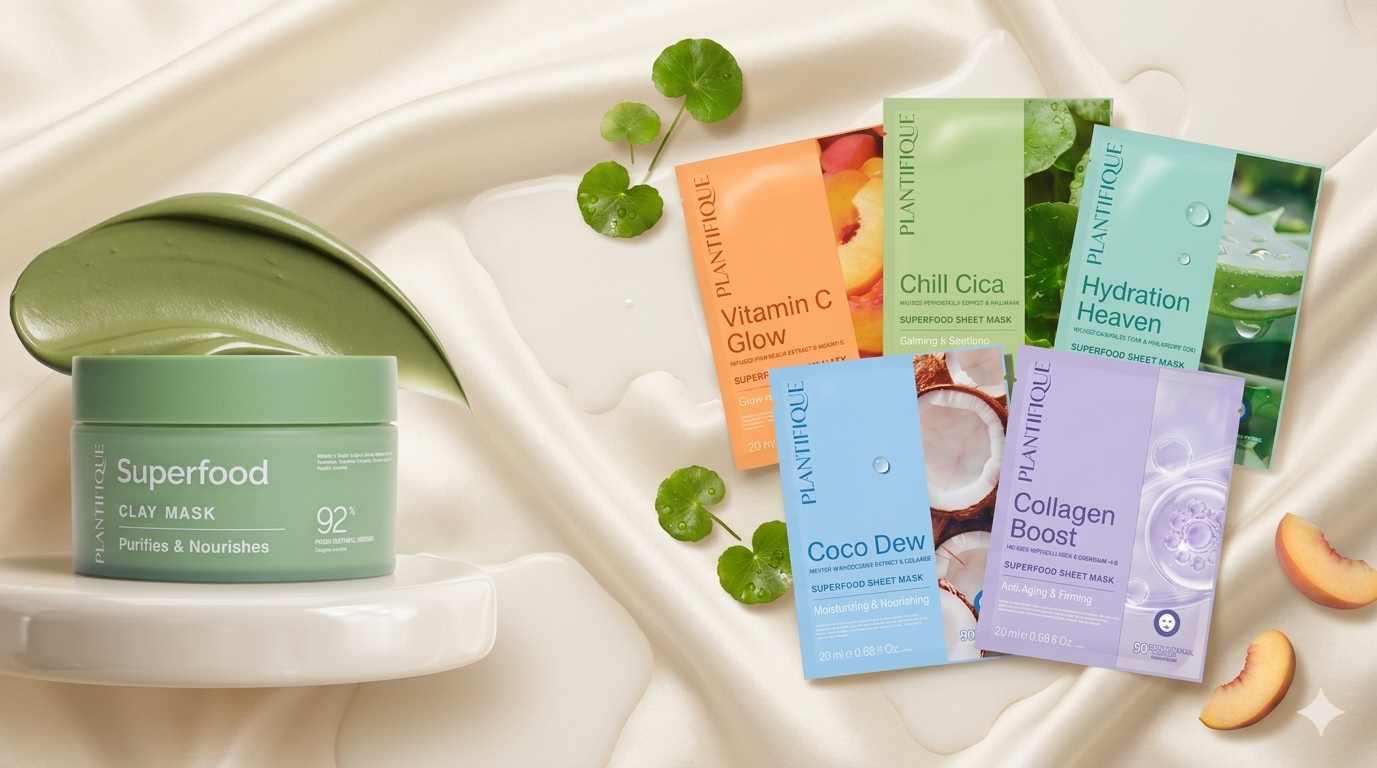
The Plantifique Superfood Marine Clay Mask works differently. It pairs the clarifying power of marine clay with seven superfoods plus aloe vera, which means it cleanses deeply without leaving your skin feeling like a desert afterward. The non-drying formula is specifically designed so you get the purity benefits of clay without the irritation that makes people avoid clay masks altogether.
The result: clearer, more balanced skin that doesn't feel tight or stressed.

What Is a Sheet Mask (And How Superfood Sheet Masks Work)
A sheet mask is a thin, face-shaped piece of fabric pre-soaked in a serum-based essence. You unfold it, smooth it onto your face, and let it sit for about 15 minutes. The fabric acts like a delivery system, keeping the serum in direct contact with your skin long enough for the ingredients to absorb deeply.
Sheet masks are designed around hydration and nourishment, not cleansing. They're soaked in ingredients like hyaluronic acid, glycerin, and plant extracts that flood your skin with moisture and vitamins. The fabric barrier keeps everything in place, so nothing evaporates before it can work.
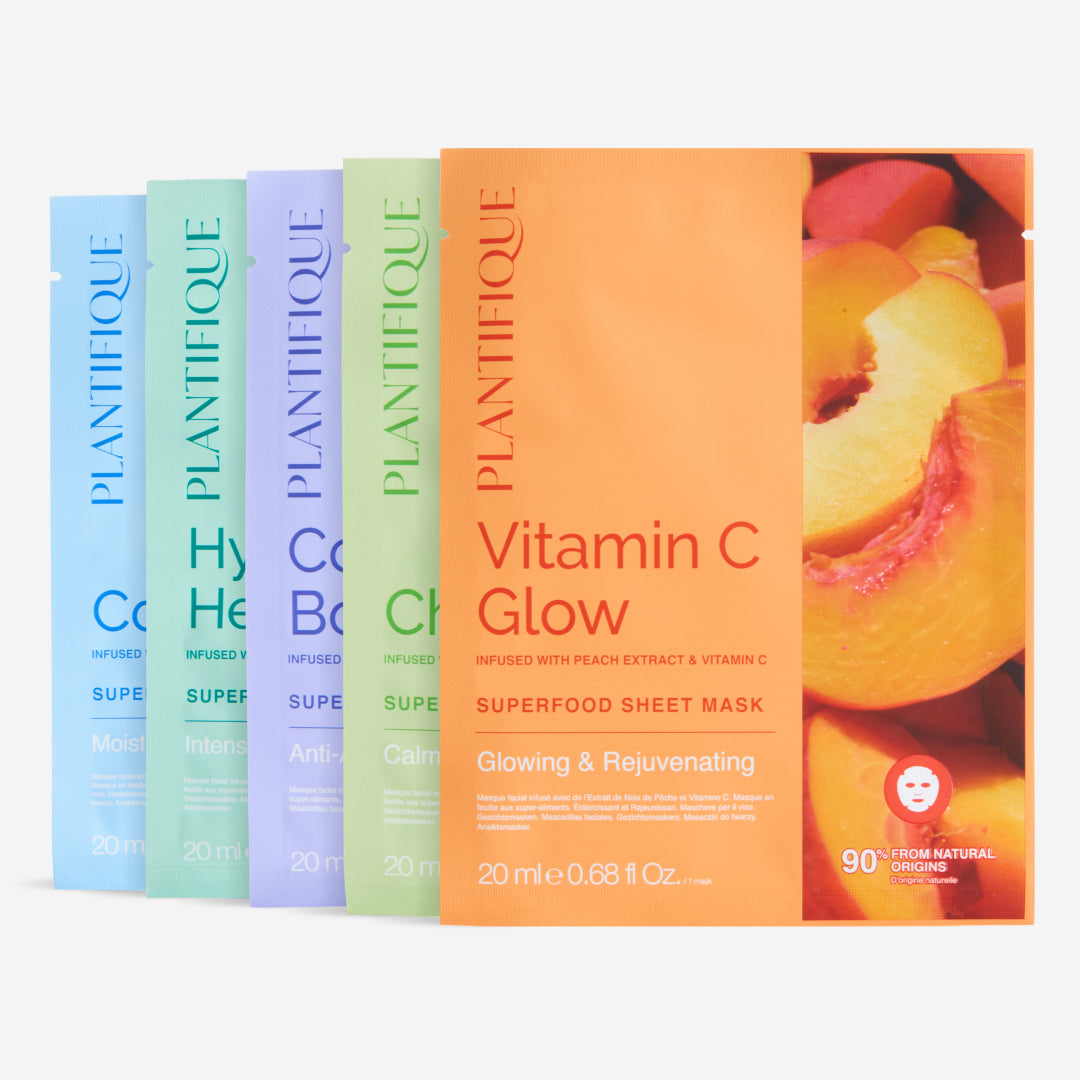
Plantifique's Superfoods Sheet Masks come in five different formulations, each designed for a different skin concern. Whether you need hydration, soothing, brightening, or nourishing, there's a specific mask for that moment. Each is infused with natural superfoods like blueberries, coconut, cica, and vitamin C. They're designed to give you that instant glow feeling, the kind of radiance that shows up immediately and makes your skin feel soft and supple within minutes.
The convenience factor is huge too. No mixing, no application technique to learn, no risk of getting it in your hair. Unfold, apply, relax for 15 minutes, done.

The 5 Key Differences That Matter
Difference #1: What They Actually Do
Clay masks cleanse. Sheet masks hydrate.
A clay mask's job is to draw out excess oil, impurities, bacteria, and buildup. It refines pores, reduces the appearance of congestion, and leaves skin feeling purified and balanced. The results are visible: clearer, less puffy skin, especially if breakouts or congestion were the problem.
A sheet mask's job is to deliver moisture and active ingredients into the skin. It plumps the skin from within, soothes irritation, brightens dull tone, and strengthens the skin barrier. The results are softer, more hydrated, glowing skin.
They're solving for completely different problems, which is why trying to use one when you need the other never works.
Difference #2: How They Work on Different Skin Types
Clay masks are best for oily, combination, and acne-prone skin. If your skin tends toward congestion, excess sebum, or large-looking pores, a clay mask addresses those specific concerns.
Sheet masks are better for dry, sensitive, and dehydrated skin. If your skin feels tight, looks dull, or is easily irritated, a hydrating sheet mask is the gentler, smarter choice.
This is crucial because using the wrong mask type can actually make your skin worse. A clay mask on already-dry skin can strip what little moisture is left. A sheet mask on very oily skin might leave the skin feeling sticky without addressing the underlying congestion.
That said, combination skin (oily in some zones, dry in others) can benefit from alternating between both, using each where and when it's needed most.
Difference #3: The Drying Factor
Here's where most people have a bad clay mask experience: regular clay masks can be very drying.
As the clay dries on your skin, it pulls moisture along with the impurities. If you leave it on too long, your skin barrier gets compromised and you end up with tightness, flaking, or irritation. The Plantifique Superfood Marine Clay Mask was specifically formulated to avoid this. The addition of hydrating ingredients like aloe vera means you get the clarifying benefit without the skin-stripping aftermath.
Sheet masks have the opposite problem, or rather, they don't have this problem at all. They're designed to hydrate, not strip. You can use them even daily without risk of over-drying.
Difference #4: Application and Ease
Clay masks require more steps and a bit more care. You apply an even layer, wait for it to dry (usually 10 to 15 minutes), soften with water, and gently rinse. There's room for error if you apply too thick or leave it on too long. But that hands-on process also means you can apply it precisely where you need it (like just on your T-zone if you only have congestion there).
Sheet masks are effortless. Unfold, press onto face, set a timer, relax. No technique required, no mess, no rinsing. The trade-off is that you cover your entire face in one formula. If you only have a problem in one zone, a sheet mask addresses your whole face regardless.
Difference #5: Frequency and Long-Term Use
Clay masks should be used less frequently because they work deeper. Once or twice a week is usually enough, depending on your skin's needs and how strong the formula is.
Sheet masks are gentle enough that many people use them several times a week or even daily without any issue. They won't disrupt your skin barrier or cause irritation from overuse because they're formulated to nourish, not extract.
Should You Use One or Both?
This is the best-kept secret about masks: you don't have to choose.
The smartest skincare approach is using both, but strategically. Think of it like different tools for different jobs. Use the clay mask when your skin needs a deep reset—when you're noticing congestion, breakouts, or that dull, sluggish feeling. Use the sheet mask for maintenance and hydration, especially on days when your skin feels dry or irritated.
A realistic routine might look like:
- Sunday: Superfood Marine Clay Mask for a weekly reset (purifying and pore-refining)
- Wednesday: Superfood Sheet Mask for mid-week hydration and a quick glow boost
- Rest of the week: Your regular skincare routine
This balance means your skin stays clean, hydrated, and balanced without being over-treated. You're addressing different needs at the right times instead of trying to force one mask to do everything.

The Ingredient Difference Matters Too
The Superfood Marine Clay Mask is enriched with aloe vera for hydration, avocado extract for nourishment, and seven different superfoods for balanced benefits. This means you're not just getting cleansing, you're getting nourishment at the same time.
The Superfoods Sheet Masks come in five formulations, each with a specific purpose. Hydration Heaven focuses on moisture, Chill Cica soothes irritation, Collagen Boost addresses fine lines, Coco Dew deeply nourishes, and Vitamin C Glow targets dull, tired skin. This variety means you can choose the exact formula your skin needs on any given day.
Both use plant-based, vegan ingredients without harsh additives. Both are designed for real results, not just a temporary feel-good moment.
What Results Should You Actually Expect
From the Superfood Marine Clay Mask: Within one use, your skin will look clearer and feel more balanced. Over consistent weekly use, congestion reduces, pores appear smaller, and breakouts happen less frequently. Your skin looks purified and refined.
From the Superfood Sheet Masks: Immediately after one use, your skin feels plump, hydrated, and glowing. It looks brighter and feels softer. Consistent use strengthens your skin barrier, reduces irritation, and gives you that sustained radiance that shows even without makeup.
Neither mask is a miracle overnight fix. Both work best with consistency, but the changes are visible and feel real.

The Bottom Line: It's Not Either Or
Choosing between a clay mask and a sheet mask isn't an either-or decision. It's understanding what your skin needs at any given moment and having both tools available.
If your skin is congested, oily, or breaking out, reach for the clay mask. If your skin is dry, irritated, or dull, reach for the sheet mask. If you have combination skin or want a truly balanced routine, use both in rotation.
The Plantifique Superfood Marine Clay Mask handles the deep cleansing with built-in hydration so it doesn't strip. The Plantifique Superfoods Sheet Masks handle the nourishment and glow with five different options for different needs.
Together, they're not competing. They're complementing each other, giving your skin everything it needs to be clear, hydrated, and genuinely glowing.
Ready to build a balanced mask routine? Start with the Superfood Marine Clay Mask for weekly purification, then add the Superfoods Sheet Masks for mid-week hydration and glow.
Read more
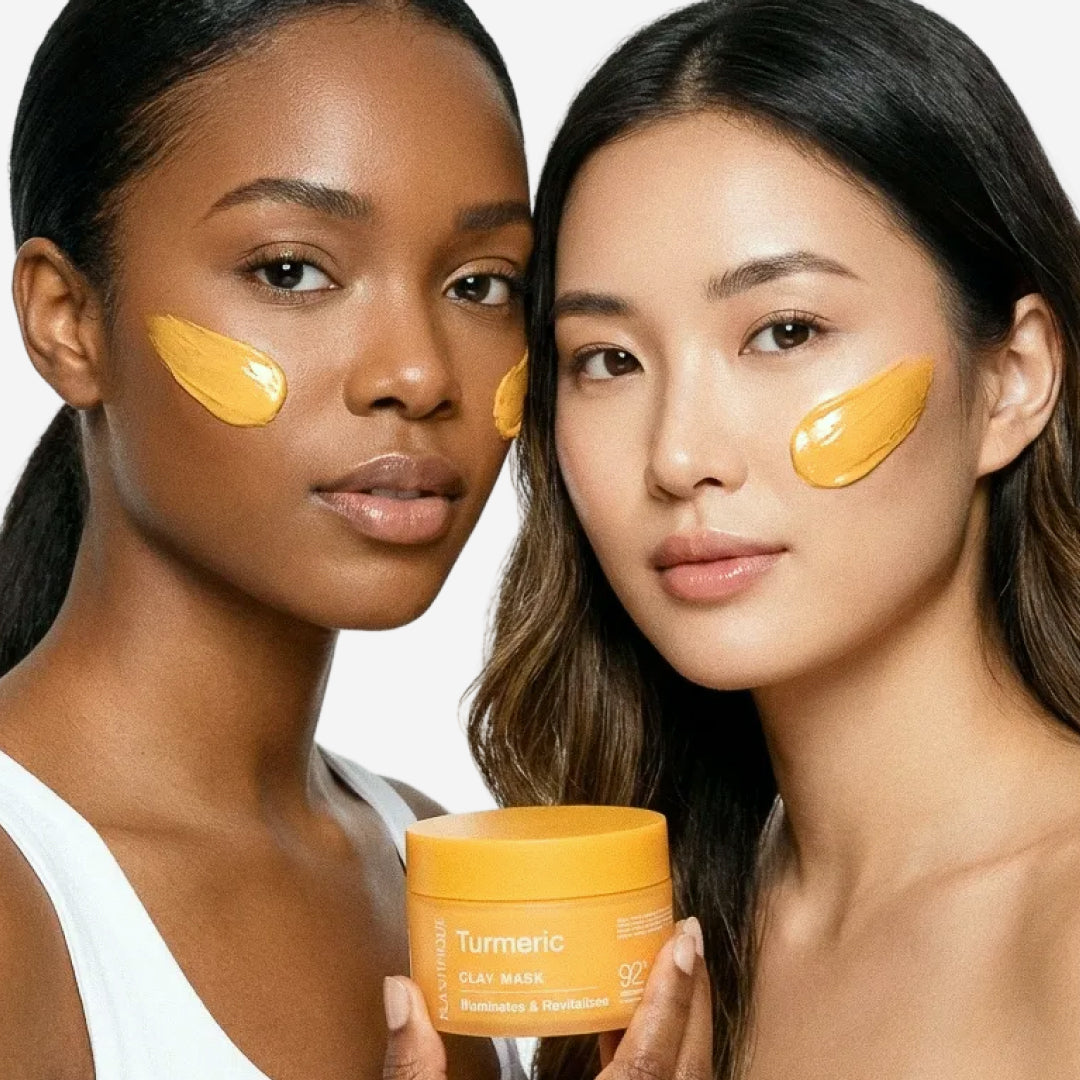
You bought the turmeric clay mask. Maybe you'd heard good things, maybe you saw the golden color and got curious, maybe you've been chasing that brighter, more even skin tone for a while and this ...

You've ordered the chin strap mask. It arrived, looks clean and professional, and you're ready to finally get that sculpted jawline you've been thinking about. You tear it open, wrap it around your...